
Introduction: The Fundamental Marketing Flaw
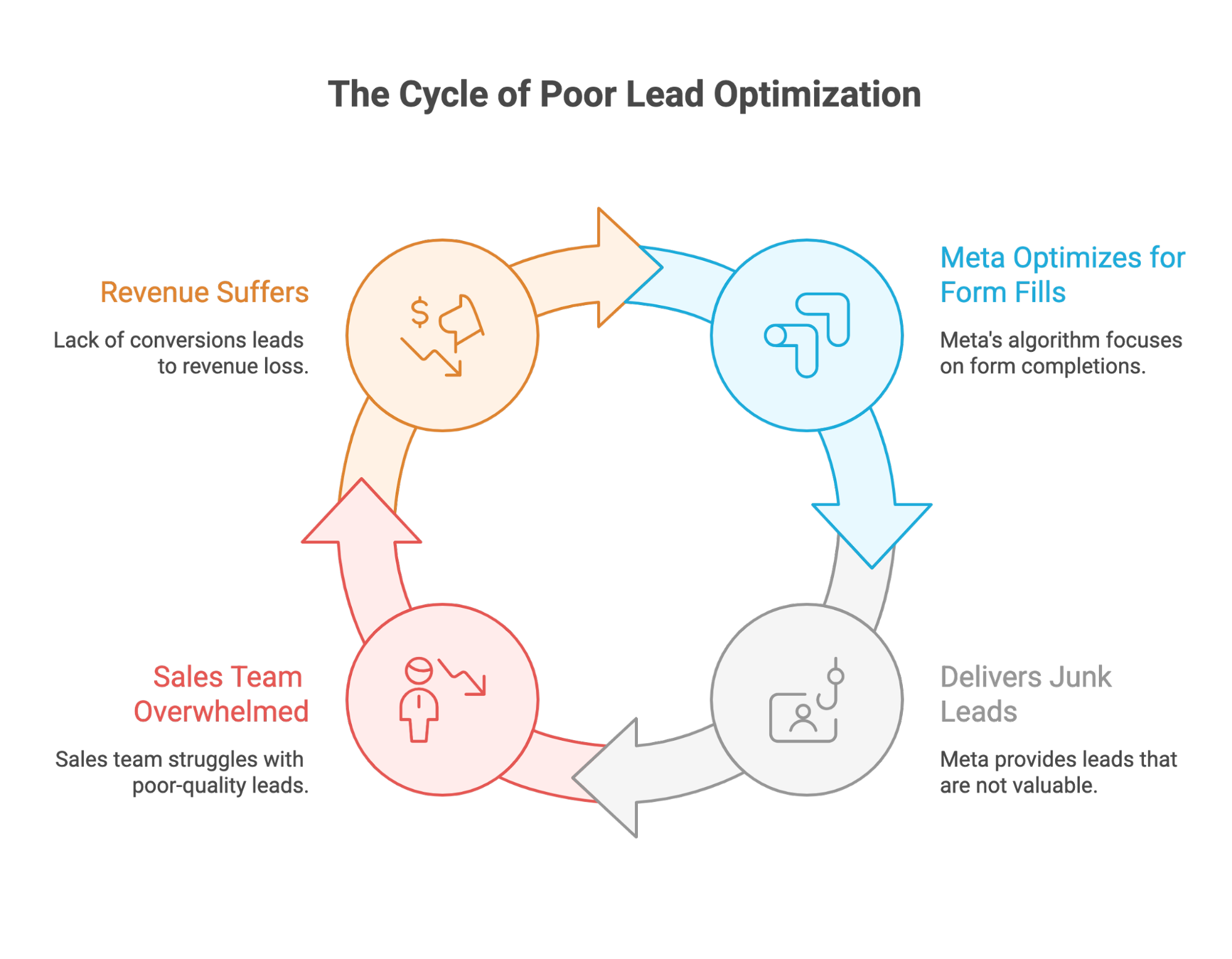
“Better leads don’t come from more ad spend. They come from better data.” Yet, despite this, over half of Facebook Lead Ads result in low-quality leads, according to many marketers. That’s because the algorithm sees a completed form, chalks it up as a win, and continues optimizing for it—completely blind to what happens next.
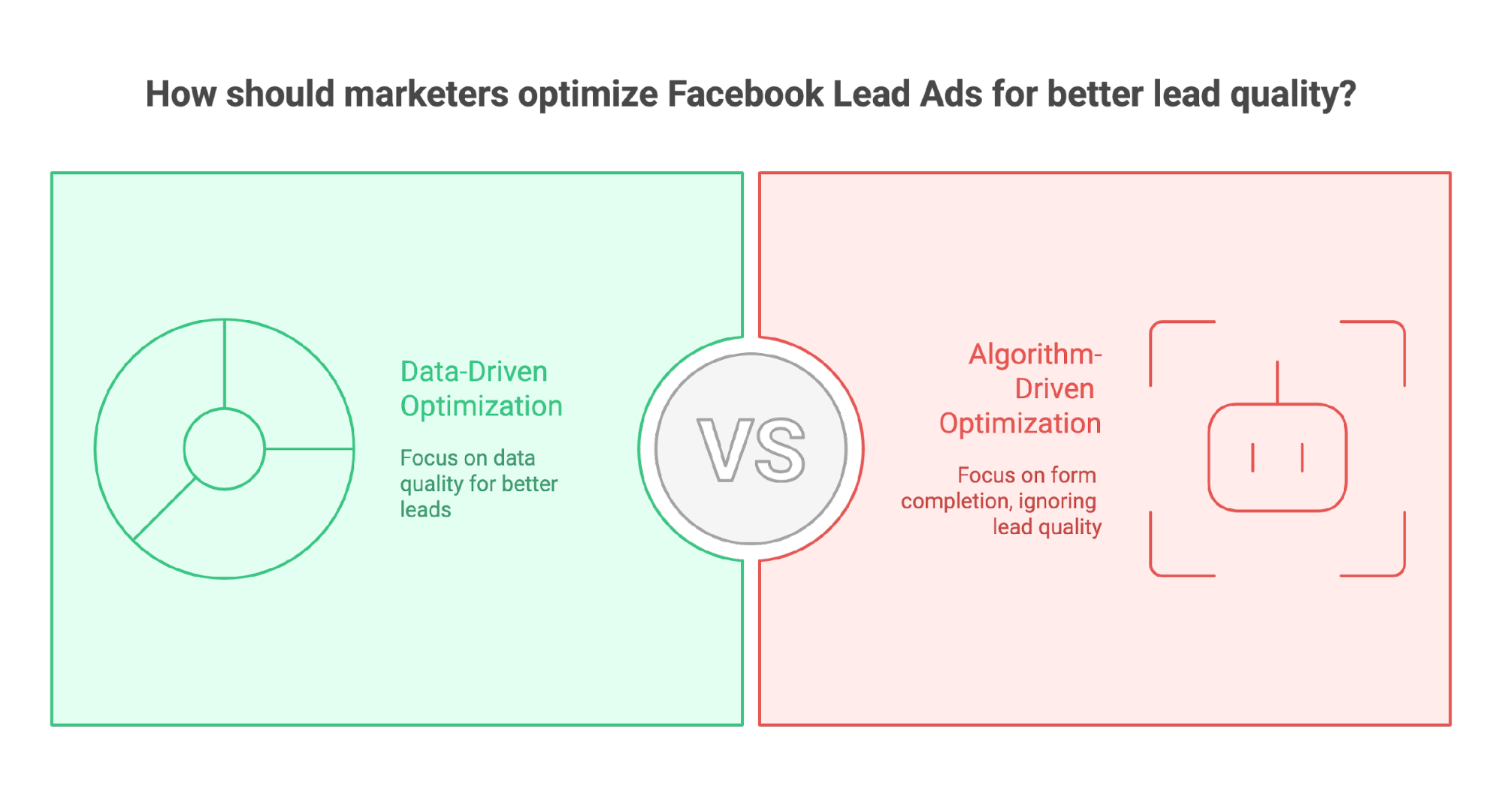
Without knowing whether a lead becomes a customer—or if it’s just a freebie hunter—you’re optimizing in the dark. This means your sales team is overloaded, your ad spend is squandered, and your funnel is clogged with noise.
Why You’re Flying Blind (and Why CRM + CAPI Is the Answer)
Problem: Pixel-Based Tracking Is Incomplete
Facebook’s pixel tracks form submissions—fine. But with ad blockers, iOS 14+ restrictions, and browser privacy changes, many form fills never register properly. That means your best data often gets lost.
Solution: CAPI + CRM = Real-World Learning
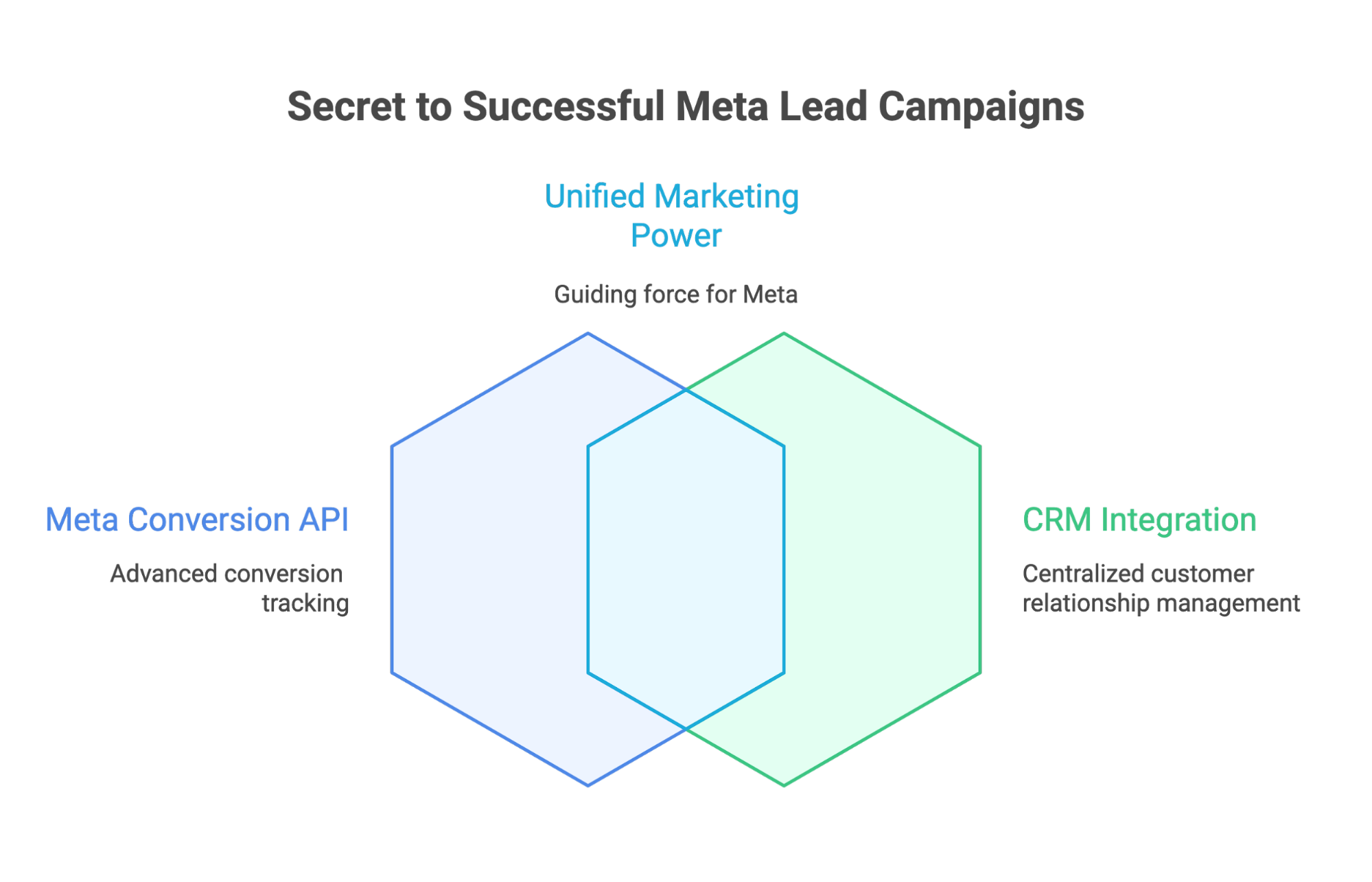
Meta’s Conversion Leads integration (via the Conversions API) closes that loop. When a lead actually converts (e.g., makes a purchase, schedules a demo), your CRM sends that event—along with the Meta lead_id—back to Meta servers. Now the algorithm knows which leads are real wins and which aren’t, and it optimizes accordingly.
Meta reports campaigns using CAPI + CRM see ~15% reduction in cost per quality lead (CQL) and a 44% improvement in lead-to-quality-lead rate.
Other real-world examples include a European marketplace that increased lead volume by 49% and reduced cost per lead by 33% when using CAPI for Leads.
And Marketo improved its qualified lead cost by about 15% using offline conversion attribution.
How It Works: The Full-Stack Funnel Loop
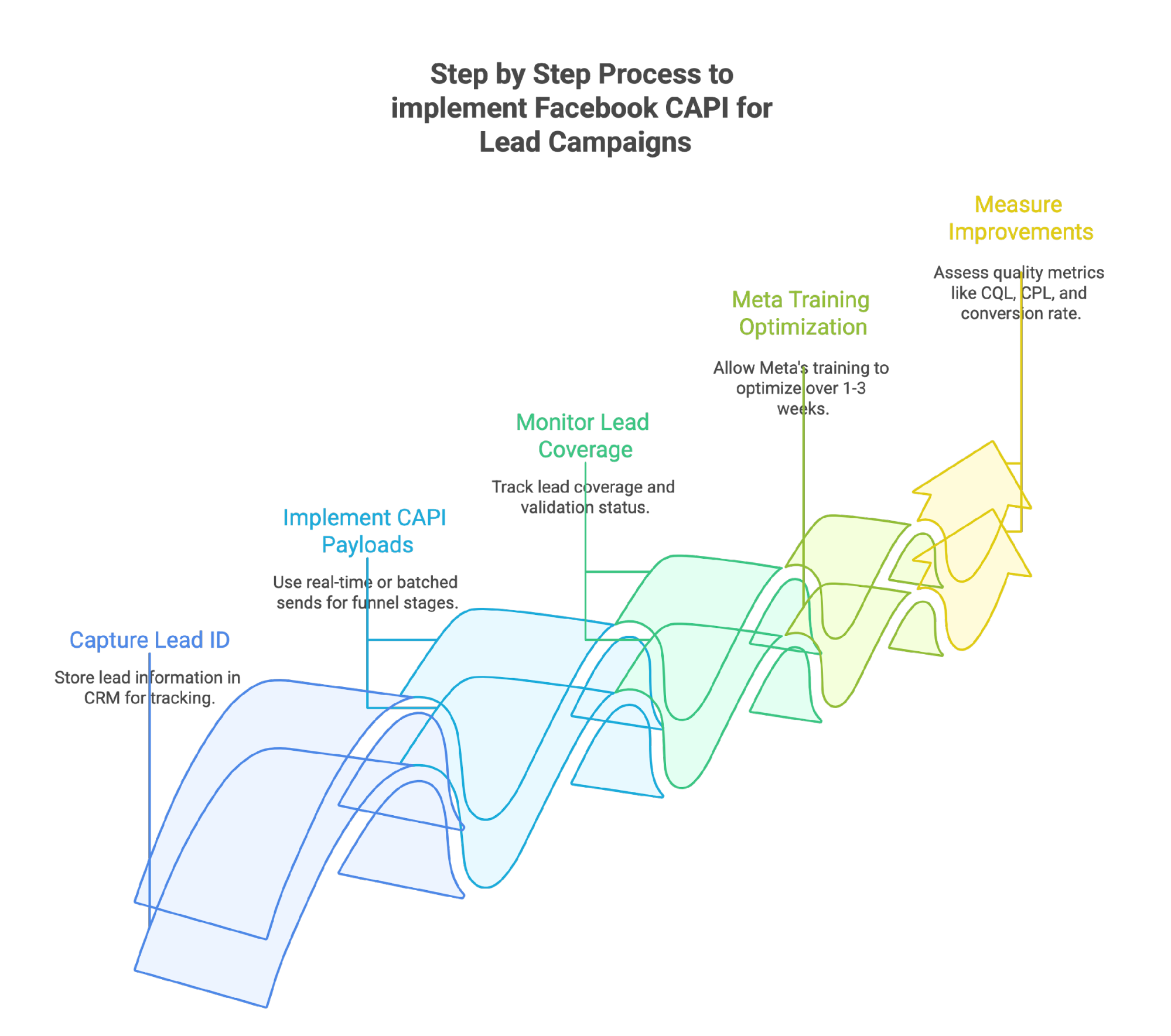
Step 1: Capture Leads via Lead Ads
Your ads generate leads via Facebook/Instagram Instant Forms. Each submission comes with a unique lead_id—a 15–16 digit identifier.
Step 2: Store Lead + lead_id in Your CRM
Ensure your CRM captures the lead_id along with the lead data—whether via a partner integration (Zapier, LeadsBridge) or a custom webhook/Graph API method.
Step 3: Track Funnel Progression
As each lead moves through the funnel—Initial Lead → MQL → Opportunity → Converted—your CRM tracks and timestamps these stage updates.
Step 4: Send CAPI Events for Each Stage
Use Meta’s Conversions API for Conversion Leads to send each stage event back to Meta:
{
“event_name”: “Converted”,
“event_time”: 1678901234,
“user_data”: {
“lead_id”: 1234567890123456
},
“action_source”: “system_generated”,
“custom_data”: {
“lead_event_source”: “Salesforce”,
“event_source”: “crm”
}
}
Key parameters explained:
- lead_id: Required, never hashed—provides precise matching.
- event_name: Funnel stage label you define.
- event_time: When the stage changed (up to 7 days late).
- action_source: Always “system_generated”.
- custom_data.lead_event_source / event_source: Used to identify your CRM.
Send all funnel stages to Meta (e.g., if one lead progresses through four stages, send four events). Batch real-time or hourly; avoid only sending final conversions.
Step 5: Validation & Lead Coverage
Within Meta’s Events Manager, you’ll see metrics like Lead Coverage (match rate), which must typically exceed 60%, and you’ll need at least two funnel stage events for validation.
Step 6: Meta Trains and Optimizes
Once validated, Meta’s system uses this conversion feedback to calibrate campaign performance—focusing on leads that actually convert, not just fill forms. It may take a week or more of data before significant lift appears.
Real-World Wisdom
“Conversions API picks up the data the pixel misses… you end up with overall more data than if you just had the pixel.”
“1000% worth it… in some funnels, can make a 50% difference.”
Summary Table: Why This Matters
|
Problem Without CAPI + CRM |
With CAPI + CRM Integration |
|
Optimizing for form fills (low quality) |
Optimizing for actual revenue-generating leads |
|
Ad spend wasted on junk leads |
Lower cost per acquisition, higher ROI |
|
No funnel visibility after lead capture |
Full visibility from lead → conversion |
|
Sales teams overwhelmed by noise |
Cleaner pipeline focused on genuine prospects |
Getting Started: What You’ll Need
- Easily capture and store lead_id in your CRM.
- Implement CAPI payloads for each funnel stage—using real-time or batched sends.
- Monitor Lead Coverage and validation status in Events Manager.
- Wait for Meta’s training to optimize (1–3 weeks).
- Measure improvements in quality metrics—CQL, CPL, conversion rate.
Final Thoughts: Stop Burning Budget on Junk Leads
Without CRM feedback, you’re optimizing for pixel outcomes—old data at best. With Conversions API + CRM integration, you’re shifting campaign performance into high gear—teaching Meta who your real, paying customers are and getting it the leads that matter.
From leads to loyal customers—scale smarter with Socialee, performance marketing agency in Ahmedabad, that makes every click count.