
This might be the biggest update Google has dropped since its inception. It is big news for laypeople, but tech-savvy people saw it coming. Google’s annual event, Google I/O 2025, introduced a game-changer for digital marketers: AI Mode. As search engines evolve into smart assistants, the rules of Search Engine Marketing (SEM) are being rewritten. Whether you’re running paid ads or working on organic SEO, AI Mode will reshape how visibility, intent, and relevance are measured.
Let’s explore what this means for businesses and marketers and how you can stay ahead with the right strategy.
What Is AI Mode and How Does It Change Search?
AI Mode is Google’s latest search interface powered by advanced generative AI. Instead of showing a traditional list of blue links, AI Mode provides an AI-generated summary, followed by curated sources, shopping results, and personalized insights, all tailored to the user’s context and query history.
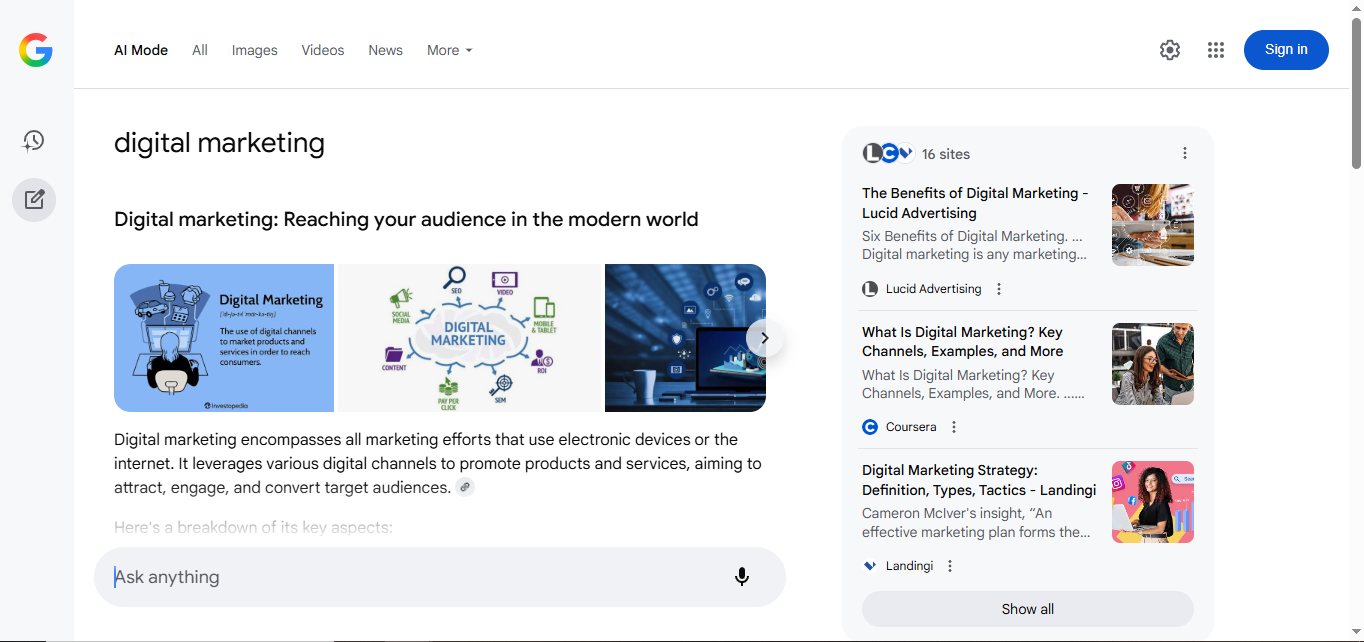
Think of it as a conversational layer over traditional search, designed to reduce friction and deliver answers faster and smarter. It merges the capabilities of Gemini AI with core search, making it more predictive, interactive, and user-focused.
Below are the most important features that will directly impact how marketers plan content, SEO, and SEM strategies:
1. AI Overviews (a.k.a. Snapshots)
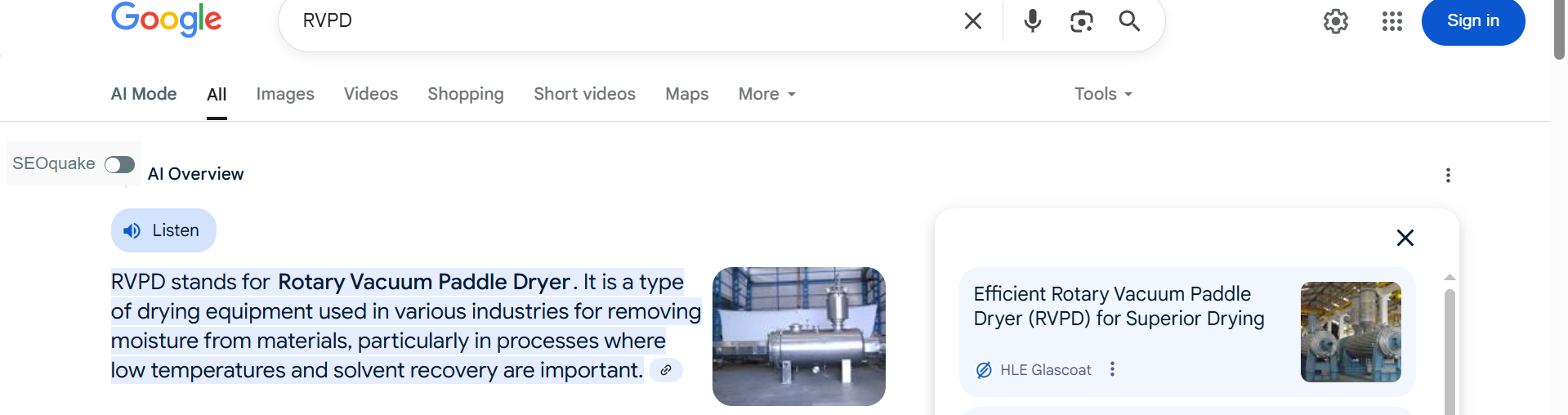
These are AI-generated summaries that appear at the top of the results page, often replacing the need to click. They pull information from various sources and present a quick, reliable answer. For marketers, this means your content needs to be accurate, structured, and trustworthy to be cited here.
2. Multistep Conversations
Users can now refine their queries through conversational follow-ups without retyping the full question. This continuous interaction rewards content that’s structured for clarity and depth, with headings, FAQs, and logically flowing sections.
3. Rich Media Integration
AI Mode embeds product carousels, how-to steps, code blocks, charts, and even maps directly into the search response. This gives a massive boost to content that includes visual aids, video, or structured data like schema markup.
4. Personalized Context
AI Mode uses a user’s search history, preferences, and even location to tailor results. This means localized SEO, first-party data strategies, and user-centric content will be critical for discoverability.
5. Integrated Ads
Paid results now appear natively within AI-generated content, not just at the top or bottom of search pages. This makes ad quality and contextual relevance far more important than traditional bid strategies.
6. Deep Search & Complex Analysis
AI Mode enables deep-dive research by generating side-by-side comparisons, trend graphs, and data visualizations, all within search. If your site includes in-depth industry insights or statistics, presenting them with clarity and visual support can help you get featured.
7. Search Live (Real-World Interaction)
With features like camera-based search, users can point their phones at an object and get live, AI-generated information or results. This opens doors for brands with physical products or brick-and-mortar stores to optimize for visual and local search experiences.
8. Agentic Capabilities (Project Mariner)
Project Mariner introduces the idea of Google’s AI acting as an agent, handling tasks on the user’s behalf (like planning a trip or comparing services). Content that helps AI make smart decisions, like comprehensive guides, checklists, and well-labeled product data, will have a competitive edge.
Is Search Still About Keywords or Conversations Now?
Search behaviour is evolving from static keyword queries to dynamic, multi-turn conversations. Users may start with a broad question, refine it with follow-ups, and expect real-time contextual understanding.
This means intent modelling will require deeper insights. Marketers must now:
- Anticipate layered queries.
- Optimize content not just for keywords, but for clarity and conversational tone.
- Use structured data to ensure content gets pulled into AI summaries.
Traditional keyword stuffing? It’s obsolete in the AI-first world.
How Will AI Mode Impact Paid Ads and SEM Campaigns?
Google Ads in AI Mode will be more contextual and less interruptive. Paid placements are now integrated within AI snapshots and suggested actions, blurring the line between organic and paid results.
Here’s what marketers need to focus on:
- Ad relevance over bidding power as AI prioritizes usefulness and engagement.
- Visual & video formats which get greater exposure within AI responses.
What’s the Future of Organic Visibility in an AI-Driven Search World?
AI Mode drastically reduces the screen space available for traditional organic listings, leading to a likely decline in click-through rates, even for websites that rank #1. In fact, Ahrefs found a 34.5% drop in position 1 CTR when AI Overviews were present, based on an analysis of 300,000 keywords. Additionally, there’s the concern of Google’s AI summarizing your content without providing clear credit or driving traffic back to your site. However, this shift also presents new opportunities.
Brands that create high-quality, authoritative content can be featured directly in AI-generated snapshots. By leveraging schema markup, publishing FAQs, and incorporating videos, marketers can increase their chances of being included in AI-curated answers. The goal now is to become a trusted source that Google’s AI consistently references.
In short, SEO isn’t dead, it’s just transforming.
How Can You Create Content That Stays Relevant in the Age of AI Mode?
As AI Mode reshapes how users interact with search, the way we write content must evolve too. It’s no longer just about keywords; it’s about usefulness, trust, and anticipating user intent. Here’s how to create content that AI will choose to feature:
1. Create Content Designed for AI Inclusion
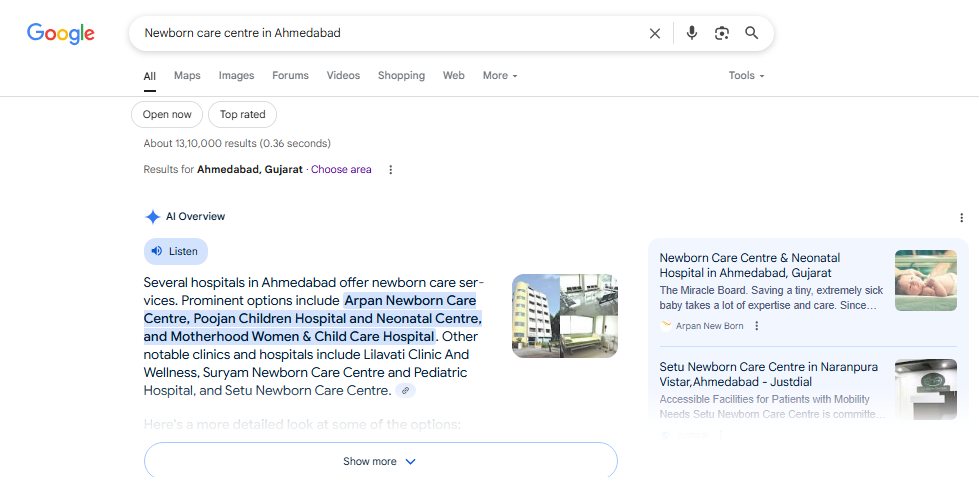
To be featured in AI Overviews, your content must be structured in a way that AI can easily understand and extract from. Focus on clear formatting, use concise paragraphs, bullet points, and direct answers to common questions. Start with strong H2 or H3 headings that align with how users phrase their searches. Incorporate schema markup, such as FAQs and How-Tos, to make your content machine-readable. The goal is not just to rank but to be referenced or quoted by AI in generative responses. Here’s how we did it for one of clients.
2. Anticipate and Guide the User’s Next Move
AI Mode encourages users to explore a topic in layers, asking follow-up questions or requesting specific details. Your content should guide them through that journey. Think about what the user might ask next, and build in logical pathways, like internal links, “What’s next?” sections, or related FAQs. By mapping out a clear path, you keep users engaged and demonstrate value beyond the first interaction. This positions your brand as a helpful resource, not just an answer.
3. Build Strong E-E-A-T Signals
Experience, Expertise, Authoritativeness, and Trustworthiness (E-E-A-T) remain core to visibility in AI-powered search. To build E-E-A-T, highlight authored content from subject-matter experts, cite reliable sources, and include real-world case studies or results. Display trust signals like client testimonials, certifications, and media mentions prominently. AI systems are designed to favor content that demonstrates credibility and depth so make your expertise impossible to ignore. By strengthening E-E-A-T, we helped our client rank for the keyword “newborn care centre in Ahmedabad” and secure a spot in Google’s AI Overview.
4. Write for Conversations, Not Just Keywords
In AI Mode, users interact more like they’re chatting than searching, so your content should feel like a natural conversation, not a keyword dump. One of the most effective ways to support this is by posing questions as headings (like “What is the best strategy for AI search?”) and then answering them clearly underneath. This mirrors how users phrase follow-up queries and helps AI understand the structure and intent of your content. Use natural, human-friendly language, avoid robotic phrasing, and include synonyms or variations of key terms so AI can match your content to a wider range of queries.
5. Track AI Performance and Stay Agile
Use Google Search Console to monitor impressions, clicks, and emerging keywords, especially from AI Overviews. Pay attention to queries where your content appears in AI summaries, even if the click-through rate is low, as this still indicates brand visibility. Consider A/B testing different content formats (like adding FAQs, using videos, or changing heading structures) to see what earns more AI exposure or dwell time.
How Can Marketers Prepare for the AI-First Search Era?
To stay competitive in AI Mode, marketers need to embrace new strategies and tools tailored for an AI-first search environment. This includes adopting AI-powered SEO platforms, and leveraging first-party data is essential for delivering personalized experiences at scale. Most importantly, marketers must undergo a mindset shift from focusing solely on driving traffic to prioritizing value, engagement, and trust. In this rapidly evolving landscape, partnering with a tech-savvy digital team like Socialee can be the difference between falling behind and thriving in the new era of search.
Socialee is a trusted social media marketing agency in Ahmedabad, having 10+ years of experience. We help businesses adapt to the future of search with data-driven SEO, AI-ready content strategies, and cutting-edge ad campaigns.
Let’s talk about how your brand can thrive in the AI-first marketing landscape. Contact us today!
Frequently Asked Questions (FAQs)
1. What is Google AI Mode, and how is it different from traditional search?
Google’s AI Mode, introduced at I/O 2025, uses generative AI to provide conversational responses instead of just listing links. It summarizes information, offers context, and enables multi-step interactions, making search more intuitive and interactive than ever before.
2. Will AI Mode affect how my website ranks on Google?
Yes. While traditional rankings still matter, AI Mode prioritizes high-quality, contextually relevant content that can be pulled into its summaries. Structured data, authoritative sources, and multimedia formats will play a larger role in your website’s visibility.
3. Is traditional SEO still relevant?
Absolutely. Traditional SEO practices like building authority, keeping content fresh, and earning quality backlinks still play a key role. However, they’re now just one part of the visibility puzzle. The new objective is twofold: maintain strong rankings in traditional search results and also get featured within AI-generated panels.
4. How should I change my SEO strategy for AI Mode?
Focus on:
- Creating in-depth, helpful content that answers real questions.
- Using structured data (schema markup).
- Optimizing for featured snippets and conversational queries.
- Enhancing content with videos, FAQs, and visuals.
5. Will Google Ads still be effective in AI Mode?
Definitely, but they will appear in new ways. Paid ads are now integrated into AI-generated responses, meaning your ads must be more relevant, engaging, and context-aware. Expect more focus on ad quality and intent matching.
6. How can Socialee help my business adapt to AI-powered search?
As a top-tier digital marketing agency, Socialee helps businesses like yours adapt to the AI-first future. We offer:
- AI-driven SEO strategies
- Smart Google Ads campaigns
- Content marketing that speaks Google’s AI language
- Full-funnel digital marketing solutions