
If you’re in industrial B2B (manufacturing, engineering, packaging machinery), you’ve probably been told LinkedIn is where you should be. And it’s true. But most industrial companies we’ve worked with make the same mistakes.
They post product photos, list features, and wonder why nothing happens.
Here’s what we’ve learned working with B2B clients like SIG (packaging solutions) and Gehlot Flexo (printing machinery).
The Core Problem: You’re Selling to Engineers, Not Consumers
Industrial B2B is different in three ways:
- Purchase decisions take 6-18 months
- Multiple stakeholders must approve (procurement, operations, finance)
- Buyers research extensively before reaching out
This changes your entire approach to LinkedIn.
The strategy splits into two parts: organic content that builds trust over time, and paid campaigns that reach specific decision-makers at target accounts.
Part 1: Organic LinkedIn Strategy
This is about visibility and credibility. When procurement teams research vendors, your LinkedIn presence should position you as the technical authority in your space.
What Doesn’t Work: Product Feature Posts
Most industrial companies share things like “Our XYZ-2000 has 40% faster throughput.”
The issue? Your buyers already know what they need. They’re comparing you against 4-5 competitors who say similar things.
What Works: Application Context
Show the product solving a specific problem.
For a packaging machinery client, we shifted from “High-speed sealing technology” to “How beverage manufacturers reduce line downtime during format changes.”
The content now addresses a real production pain point. Engagement went from 20-30 likes to 150-200 per post, with actual inquiries coming through LinkedIn DMs.
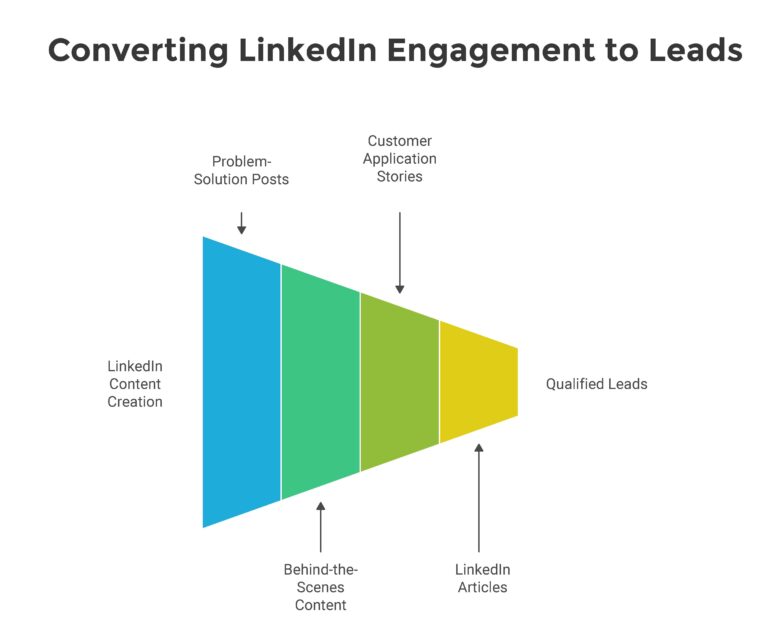
Three Content Types That Work
Based on work with industrial clients:
1. Problem-Solution Posts
Structure: “If you’re experiencing [specific issue], here’s why it happens and what to check first.”
These position you as the expert before any sale conversation starts.
2. Behind-the-Scenes Technical Content
Manufacturing processes, quality testing, engineering decisions. This builds credibility with technical evaluators who influence purchase decisions.
3. Customer Application Stories (not traditional case studies)
Don’t write: “We helped Company X increase efficiency by 30%.”
Write: “Here’s how a snack food manufacturer solved a specific packaging challenge during their product line expansion.”
Focus on the problem and solution. The prospect can see themselves in that scenario.
LinkedIn Articles for Technical Authority
Regular posts disappear from feeds within 48 hours. LinkedIn articles stay on your profile permanently and rank in search.
Use articles for:
- In-depth technical guides (How to specify packaging equipment for new product launches)
- Industry analysis (Impact of new food safety regulations on line design)
- Troubleshooting frameworks (5 reasons your sealing quality is inconsistent)
One of our industrial clients published a 2,000-word article on compliance requirements for pharmaceutical packaging. It’s been viewed 3,400+ times, mostly by quality managers and regulatory specialists. Exactly who approves vendor selection.
The article sits on their profile as proof of expertise. When prospects research the company, they find substance, not just product brochures.
Write one comprehensive article per quarter. Repurpose sections into weekly posts. You’ve just created 12 weeks of content from one piece.
How LinkedIn’s Algorithm Works
Most industrial companies post at random times and wonder why engagement is low.
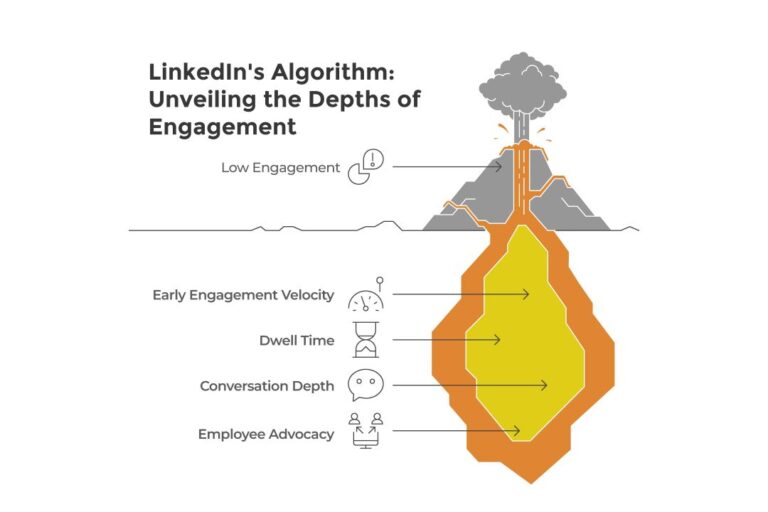
LinkedIn’s algorithm prioritizes three things:
1. Early engagement velocity
The first 60 minutes after posting determine reach. If your post gets immediate likes and comments, LinkedIn shows it to more people. If it sits idle, it dies in the feed.
For B2B clients, we post when their target audience is most active. Typically Tuesday-Thursday, 7-9 AM or 12-1 PM in their timezone. Early engagement from employees, partners, or existing connections signals quality to the algorithm.
2. Dwell time
LinkedIn measures how long people spend reading your post. Longer dwell time = higher quality signal.
This is why short, punchy posts often underperform for technical B2B topics. A 150-word post about “productivity tips” gets scrolled past in 3 seconds. A 400-word breakdown of a specific engineering challenge holds attention for 45-60 seconds.
Write for substance, not brevity.
3. Conversation depth
Replies to comments matter more than the comments themselves. When the post author responds thoughtfully to comments, LinkedIn interprets it as valuable discussion and extends reach.
For industrial clients, we build this in. When someone comments with a question or experience, the company’s technical lead responds with additional context (not just “Thanks for sharing!”). That conversation thread signals authority and keeps the post active in feeds longer.
Employee Advocacy (The Multiplier Most Companies Ignore)
Your company page might have 2,000 followers. But your 50 employees collectively have 15,000+ connections.
When employees share company content from their personal profiles, reach expands 5-10x compared to posting from the company page alone.
Here’s why it works:
1. LinkedIn prioritizes personal profiles over company pages
The algorithm treats content from individuals as more authentic. A post shared by your sales engineer reaches more people than the same post from your company page.
2. Employees have diverse networks
Your company page followers are mostly existing customers and competitors. Your employees are connected to prospects, industry peers, suppliers, and potential hires. Different audiences see the content.
3. Trust transfer
When a procurement manager sees content shared by someone they know (even loosely), it carries more weight than a branded post from an unknown company.
The problem: most employee advocacy programs fail because companies make it complicated.
What doesn’t work:
- Asking employees to share everything
- Forcing corporate messaging
- Making it a mandatory task
What works:
- Share 2-3 posts per month that employees actually find useful
- Let them add their own commentary (authentic beats polished)
- Focus on technical content, not promotional material
For a packaging machinery client, we identified 8 employees (engineers, project managers, service technicians) willing to share content. Each person shares 1-2 posts monthly with their own take on it.
Result: company content now reaches 12,000+ additional professionals in target industries. Three qualified leads in the last quarter came directly from employee shares, not the company page.
The key: make it easy and optional. Share a Slack message or email with the post link and a suggested (not required) caption. Employees who find it relevant will share. Those who don’t, won’t. That’s fine.
One Metric That Actually Matters
Forget vanity metrics like follower count or post likes.
Track this: Profile visits from target accounts.
If procurement managers at your dream clients are viewing your profile and company page (even if they don’t engage publicly), that’s buying intent.
We monitor this weekly for B2B clients. When we see profile visits spike from a target account, we know they’re in research mode. That’s when outreach timing matters most.
Part 2: Paid LinkedIn Strategy
Organic builds credibility. Paid gets you in front of specific decision-makers at companies you want as clients.
The Targeting Gap Most Industrials Miss
Your LinkedIn ads are probably targeting “Manufacturing Decision Makers” or “Operations Managers.”
Too broad.
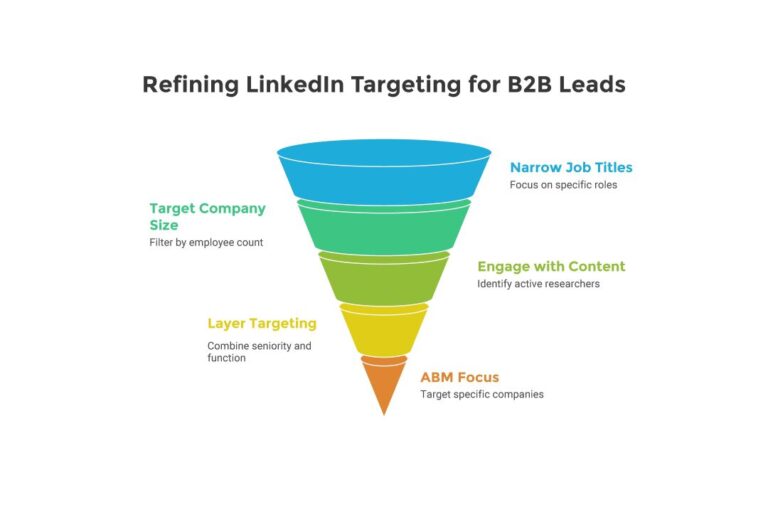
For SIG’s global B2B acquisition campaign, we narrowed targeting to:
- Specific job titles (Packaging Engineers, Production Managers)
- Companies with 200+ employees in food/beverage sectors
- Engaged with packaging industry content in the last 90 days
The result: better lead quality, lower cost per acquisition, and conversations with the right stakeholders.
LinkedIn’s Layered Targeting (What Most Agencies Miss)
Beyond basic job titles and industries, LinkedIn offers targeting layers most industrial companies underuse:
Job Seniority + Function Combinations
Target “Senior-level” + “Operations” + “Engineering” simultaneously. This finds Operations Directors with engineering backgrounds. The exact profile that influences technical purchases.
Company Growth Signals
Target companies that recently raised funding, expanded headcount, or posted about new facility openings. These businesses are in buying mode for equipment and systems.
Interest + Intent Targeting
Layer “interested in industrial automation” with “engaged with manufacturing content in the last 30 days.” This finds active researchers, not passive audiences.
Lookalike Audiences from Your Best Customers
Upload your top 20 customers to LinkedIn. Let the platform find similar companies by firmographic and behavioral patterns. This works especially well for niche industrial segments.
For a client in printing machinery, we built a lookalike from their 15 largest accounts (flexible packaging converters). The resulting audience (companies we’d never heard of) delivered 40% of qualified leads in the first quarter.
Account-Based Marketing (ABM) on LinkedIn
Instead of casting a wide net, ABM focuses your budget on 50-100 specific companies you want as clients.
Here’s how it works:
Upload a target account list to LinkedIn Campaign Manager. Your ads now show only to decision-makers at those companies. No wasted impressions on businesses that don’t fit your ideal customer profile.
For our packaging machinery clients, we’ve targeted specific food and beverage manufacturers by company name. The result: procurement teams at dream accounts see educational content about their exact challenges (format changeovers, line efficiency, regulatory compliance) before any sales conversation happens.
When they eventually reach out, they already understand your differentiation.
The setup requires:
- A clear list of target companies (be specific: not “manufacturing companies,” but “beverage manufacturers with 3+ production lines”)
- Content tailored to their known pain points
- Patience. ABM pays off over 6-12 months as accounts move through research phases.
Thought Leadership Ads
Standard LinkedIn ads promote your product or service. Thought Leadership ads promote your content, with your executive’s name and photo attached.
The psychology is different. People scroll past “Buy our machine” ads. They stop for “Manufacturing engineer shares the #1 mistake in line automation.”
We’ve run Thought Leadership campaigns for B2B clients where the CEO or technical director shares operational insights. The content gets 3-4x higher engagement than standard company ads because it feels like peer-to-peer advice, not advertising.
The format works especially well for:
- White papers on technical topics
- Video walkthroughs of complex processes
- Industry trend analysis from your leadership team
One critical point: the content must actually be valuable. If it’s a thinly disguised sales pitch, engagement drops and credibility suffers.
Where to Start
Most companies try to do everything at once. That doesn’t work.
If you have no LinkedIn presence: Start with weekly educational posts. One insight per week, 200-300 words. Do this consistently for 3 months before adding anything else.
If you’re already posting: Add monthly ABM campaigns to 50 target accounts (if you have a defined prospect list).
If both are working: Add quarterly LinkedIn articles for technical depth.
Thought Leadership ads come last. Only after you have proven content that already performs organically.
Consistency beats volume. One solid post per week plus targeted ABM builds more pipeline than scattered activity across every LinkedIn feature.
The Real Competitive Edge
Most of your competitors treat LinkedIn like a brochure. Static, product-focused, impersonal.
If you use it as a technical resource library instead, you become the brand procurement teams remember when budget approval comes through nine months later.
That’s the entire game.
Industrial B2B buying cycles are long. Your LinkedIn presence should educate and build trust over time, not push for immediate conversion.
At Socialee, we’ve built LinkedIn strategies for B2B clients from packaging machinery to printing solutions. The same principle applies across sectors: value first, visibility follows.